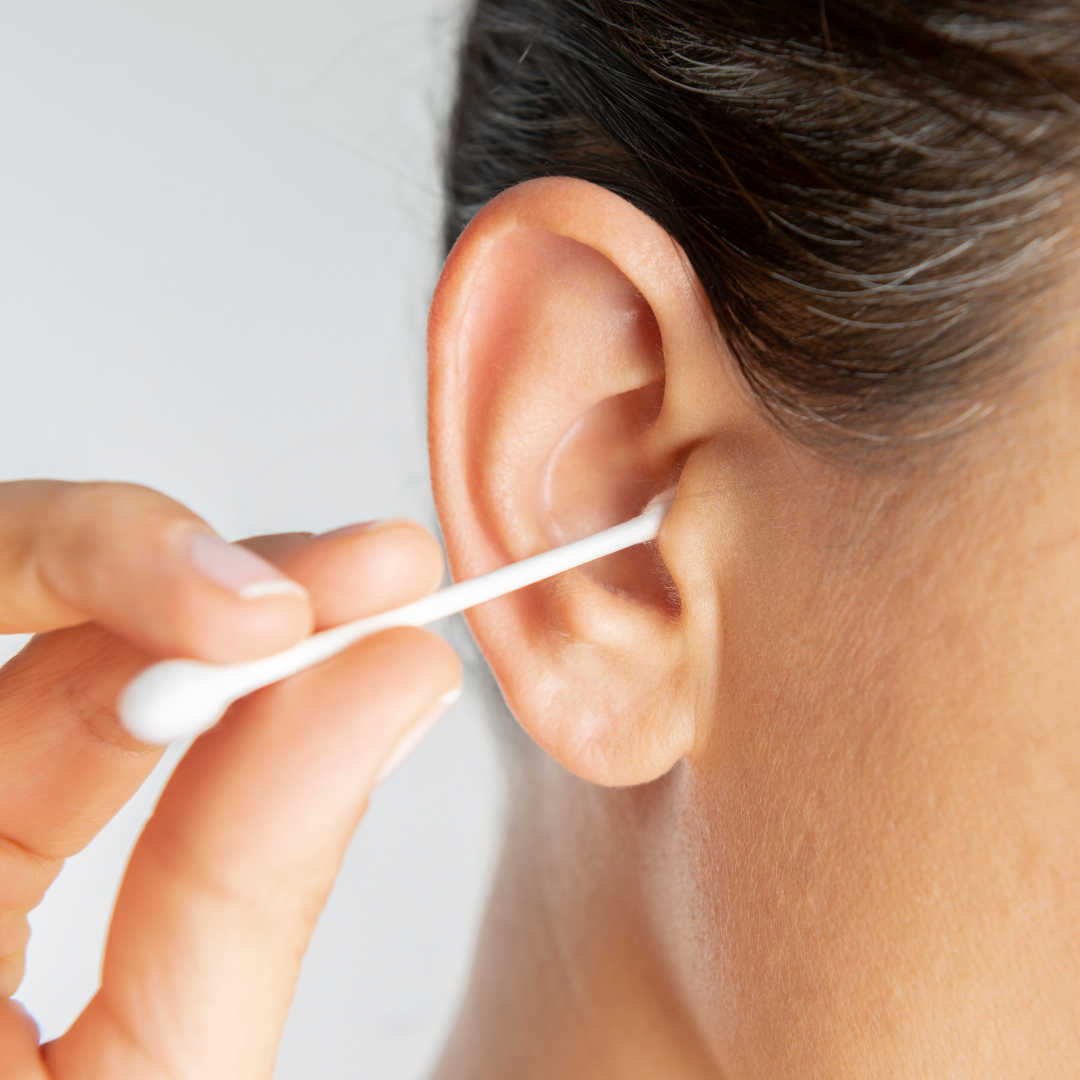
Although cotton swabs feel like accessible ear-care tools, introducing them into the canal hinders self-cleaning mechanisms and may harm your hearing. We perform thorough examinations to verify if earwax removal is necessary and select appropriate procedures for your ear condition. Healthy ears rarely require aggressive manual intervention; nevertheless, when blockage develops, we assist patients in safely extracting excess cerumen.
Why Are Q-Tips Bad for Your Ears?
Human earwax, formally designated as cerumen, is a functional secretion rather than unwanted dirt. This substance captures environmental dust, restricts bacterial colonization, conditions the delicate canal walls, and defends fragile skin. Rhythmic jaw motion and outward dermal migration move drying wax toward the external orifice, where it effortlessly washes away.
Using a cotton swab within the ear canal halts this physiological self-cleaning function. Even though the applicator collects minor residue, it typically drives the bulk of cerumen directly toward the delicate eardrum. Frequent swab use consolidates soft wax into a rigid barrier, generating an uncomfortable plugged sensation that fosters continuous overcleaning.
Cotton swabs may be used around the folds of the outer ear, but they should not enter the canal.
How Can Ears Get Damaged from Q-Tip Use?
The epidermal tissue coating the ear canal is thin and tears under minimal friction. Minor scratches can trigger localized pain, bleeding, and bacterial infiltration, substantially elevating the risk of otitis externa. In addition, the cotton head can loosen and become retained as an obstructing foreign object in the ear.
Documented injuries associated with cotton swabs include:
- Severe earwax impaction near the tympanic membrane
- Epithelial lacerations, inflammation, erythema, or bleeding
- Pathogenic infection involving the ear canal
- Retained cotton tips or foreign debris inside the canal
- Ruptured, torn, or perforated tympanic membrane
- Mechanical trauma to the middle-ear ossicles behind the eardrum
- Transient hearing reduction or permanent sensorineural loss
- Distressing tinnitus, secondary dizziness, or debilitating ear pain
While severe structural trauma occurs infrequently, accidental elbow jostling, sudden slipping, or over-insertion can provoke profound injury.
How Often Should Earwax Get Removed?
For the average individual, scheduled cerumen removal is completely unnecessary. Healthy ears continually move wax outward, and routine bathing usually cleans the visible outer ear. Overzealous hygiene parches canal tissue, incites chronic irritation, and increases vulnerability to bacterial infection or deep plugs.
Clinical clearing is warranted if cerumen occludes the auditory pathway, prevents diagnostic evaluation of the eardrum, affects a hearing aid, or sparks discomfort.
Safe Protocols for Managing Cerumen at Home
When cerumen creates no clinical symptoms, leaving the canal alone remains the most prudent approach. Use a damp, soft cloth to clean only the exterior ear structures, allowing the inner canal to maintain itself.
If hardened wax requires softening, we can guide you toward over-the-counter cerumenolytics or drops featuring mineral oil, carbamide peroxide, glycerin, or saline. Ensure you use the exact recommended volume and follow the labeled duration instructions carefully. Stop if the drops cause pain, marked dizziness, rash, or worsening symptoms.
Home flushing is contraindicated in many cases and should solely be conducted after an expert confirms safety and reviews proper methods. You must never employ high-pressure dental water jets for ear clearing. Do not use dangerous devices like ear candles, metal scrapers, endoscopic camera tools, hairpins, or unverified suction units. Such unregulated implements can cause thermal burns, canal lacerations, eardrum perforations, or deeper cerumen impactions.
When Should I See a Doctor for Earwax Removal?
You should book a clinical appointment if your ear feels blocked following softening drops, cerumen is deeply wedged, or home methods fail to work. Professional intervention is highly advisable for individuals with mobility challenges, narrow ear canals, hearing aid devices, or surgical backgrounds that make home care dangerous.
Arrange an immediate clinical evaluation for:
- Severe ear pain, intractable itching, or outer ear tenderness
- Visible blood, purulent discharge, clear fluid drainage, or offensive ear odors
- Elevated body temperature or edema surrounding the ear structures
- The sudden appearance of tinnitus or true dizziness
- Hearing loss that starts abruptly or fails to resolve following wax removal
- Suspected tympanic membrane tears or retained cotton foreign bodies
- Chronic cerumen impactions that clog or disrupt hearing aids
Treat sudden hearing loss in one ear as a medical emergency rather than assuming it’s wax. Immediate assessment allows clinicians to differentiate an external canal obstruction from an urgent inner-ear pathology.
How Can a Doctor Remove Excess Earwax?
We initiate the appointment by visualizing the canal through a diagnostic otoscope or microscope to verify wax presence and check for signs of infection, laceration, or eardrum tears. The most appropriate removal approach is determined by wax texture, canal structure, patient background, surgical history, and individual tolerance.
Safe audiological extraction methods include:
- Medical-grade wax softeners administered prior to or during the procedure
- Regulated mechanical irrigation with body-temperature saline for sealed eardrums
- Controlled vacuum micro-suction under continuous visual monitoring
- Manual instrument clearance utilizing dedicated ear loops, fine curettes, or small forceps
Direct visualization allows the clinician to work around sensitive canal skin and stop if discomfort occurs. You may need more than one method for dry or tightly packed wax. After removal, the ear can be reexamined to confirm that the canal and eardrum are healthy. If post-cleaning symptoms such as fullness, tinnitus, unsteadiness, or hearing reduction persist, specialized testing can locate the primary cause.
Arrange Safe In-Office Earwax Removal
If your ears feel blocked or your hearing has changed, schedule an evaluation with us instead of reaching for a Q-Tip. Your appointment can include a review of symptoms, previous ear procedures, hearing aid use, home treatments, and factors that may increase wax buildup. Reach out to our audiology clinic today to schedule your professional earwax-removal visit.